Oil prices spiked again overnight as promises to release emergency supplies failed to calm markets.
Iran has closed off the Strait of Hormuz, a narrow strip of water through which a fifth of the world’s LNG and fertiliser, and a quarter of global oil supplies, usually travel.
Unprecedented
On Wednesday, the International Energy Agency (IEA) announced that its 32 member countries – including the US, UK and Germany – had agreed to release an unprecedented 400 million barrels of oil from emergency reserves.
The IEA’s Executive Director, Dr Fatih Birol, called it a “major action aiming to alleviate the immediate impacts of the disruption in markets”.
But the markets remain spooked, with oil prices briefly surpassing $100 per barrel again for a few hours early Thursday morning before falling back slightly.
So far, by our calculations, since Wednesday, IEA countries have committed to release at least 53 million barrels.
Germany’s energy minister said they would release 2.4 million tonnes of oil, the equivalent of around 18 million barrels, hinting that the real reason was to help avoid shortages in Asia, particularly Japan, rather than to calm crude futures.
“We will comply with this request and contribute our share, because Germany stands behind the IEA’s most important principle: mutual solidarity”, said Katherina Reiche.
Slow
European countries have been quick to emphasise that they are not facing shortages themselves, but some have been slow to announce how much they are prepared to contribute.
Luxembourg said it would consider a “possible release of a portion of the Grand Duchy’s strategic reserves, as well as the volumes involved”.
Estonia, Latvia and Lithuania said that they would coordinate with each other “in order to achieve the greatest possible positive impact on both the market and consumers”, without putting a figure on it.
Fatih Birol insisted that all IEA members are on board, yet Belgium said that it would not be releasing any oil from its reserves.
“Belgium currently holds stocks exceeding 90 days, in line with its European obligations. These stocks are not a tool for regulating prices, but a mechanism intended to guarantee security of supply should it be threatened. This is not the case at present”, the Belgian energy ministry told us.
Russia
Unlike Asia, which is heavily dependent on Middle East oil, Europe gets its fuel from a variety of sources. It is a lesson learnt after Russia invaded Ukraine: Don’t put all your eggs in one basket.
But whilst Europe is not facing a shortage of supply, according to EU leaders, it is nonetheless suffering from higher prices.
Price of dependence
“The ten days of war have already cost European taxpayers an additional €3 billion in fossil fuel imports. Additional. That is the price of our dependence,” said European Commission President, Ursula von der Leyen. “The fact is, we have energy sources that are home-grown – renewables and nuclear – their prices have remained the same over the last ten days,” she added.
Channel 4 News economics reporter, Neil Macdonald, said the IEA action amounted to only about 20 days’ worth of oil that would normally travel through the Strait of Hormuz. “I don’t think anyone really believes that this can replace the need to get the tankers moving again,” he said. But reopening the Strait is proving difficult.
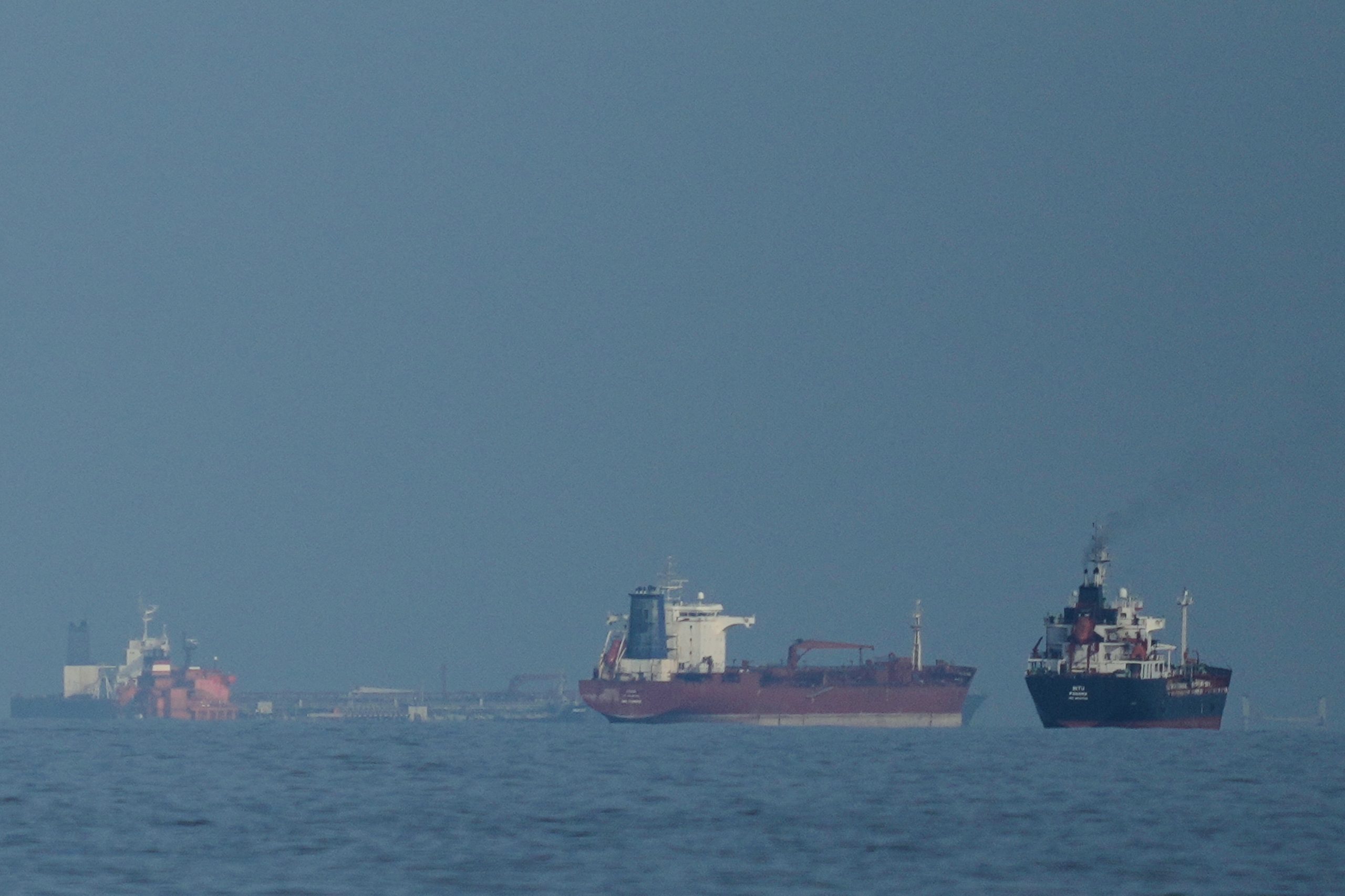
The US said it had blown up 16 Iranian mine-laying ships, but the risk from falling missiles and drones is too high for most shippers and their insurance premiums. Most are avoiding the area with an apparent build-up of boats either side of the Strait visible on shipping tracking apps.
On fire
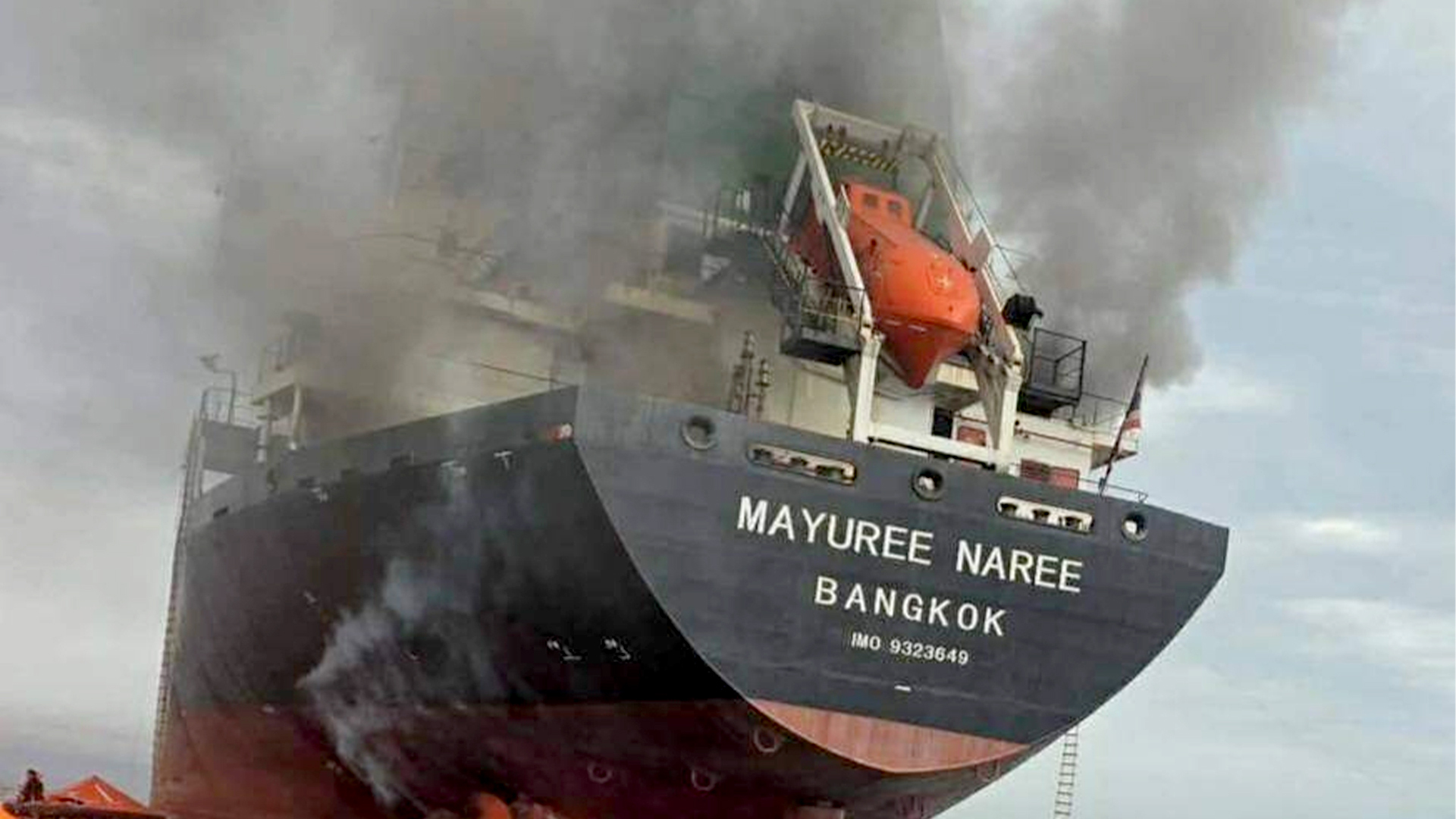
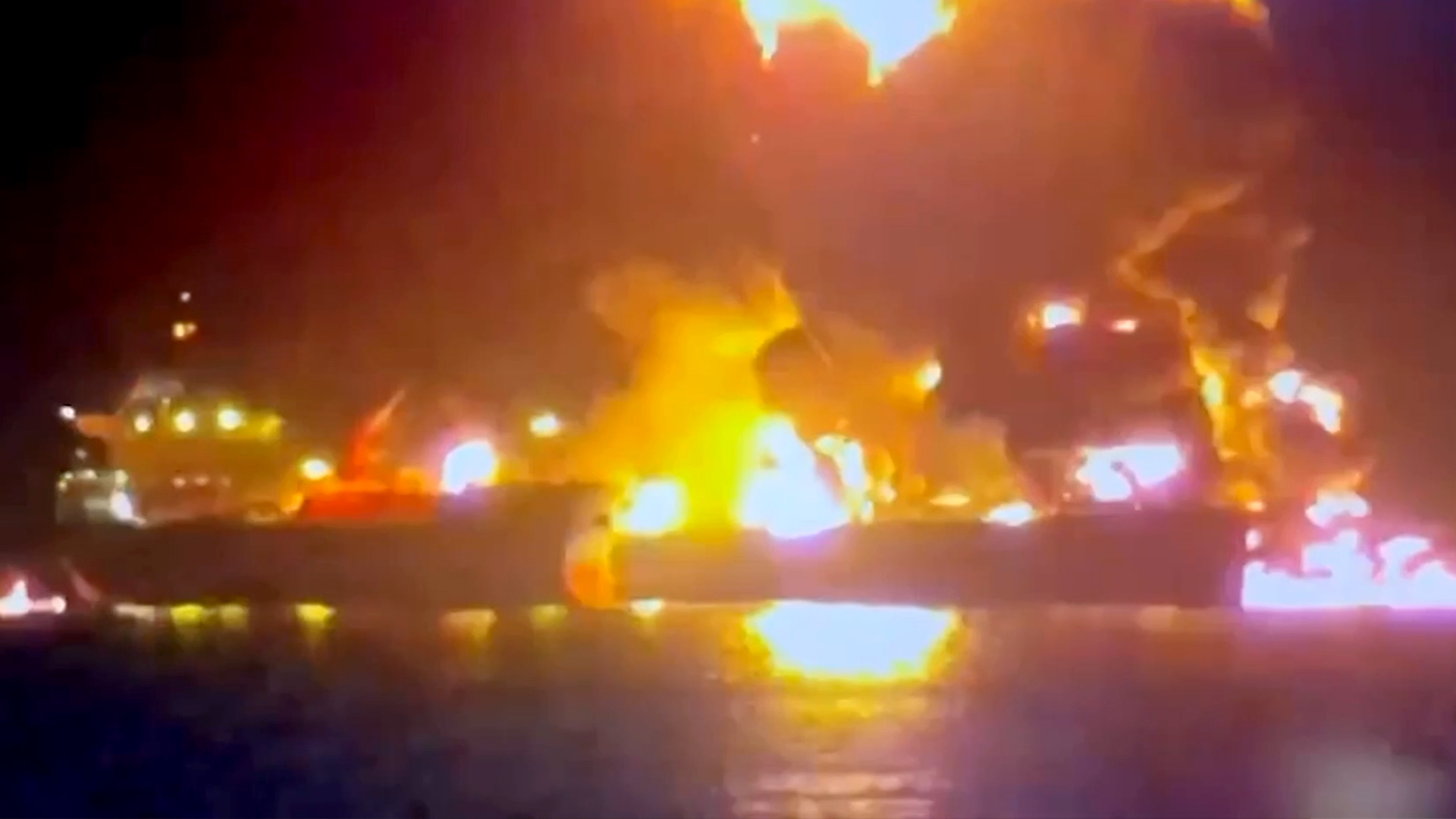
A Thailand-flagged bulk carrier was on fire on Wednesday after reportedly being hit by a projectile whilst attempting to travel through the Strait.
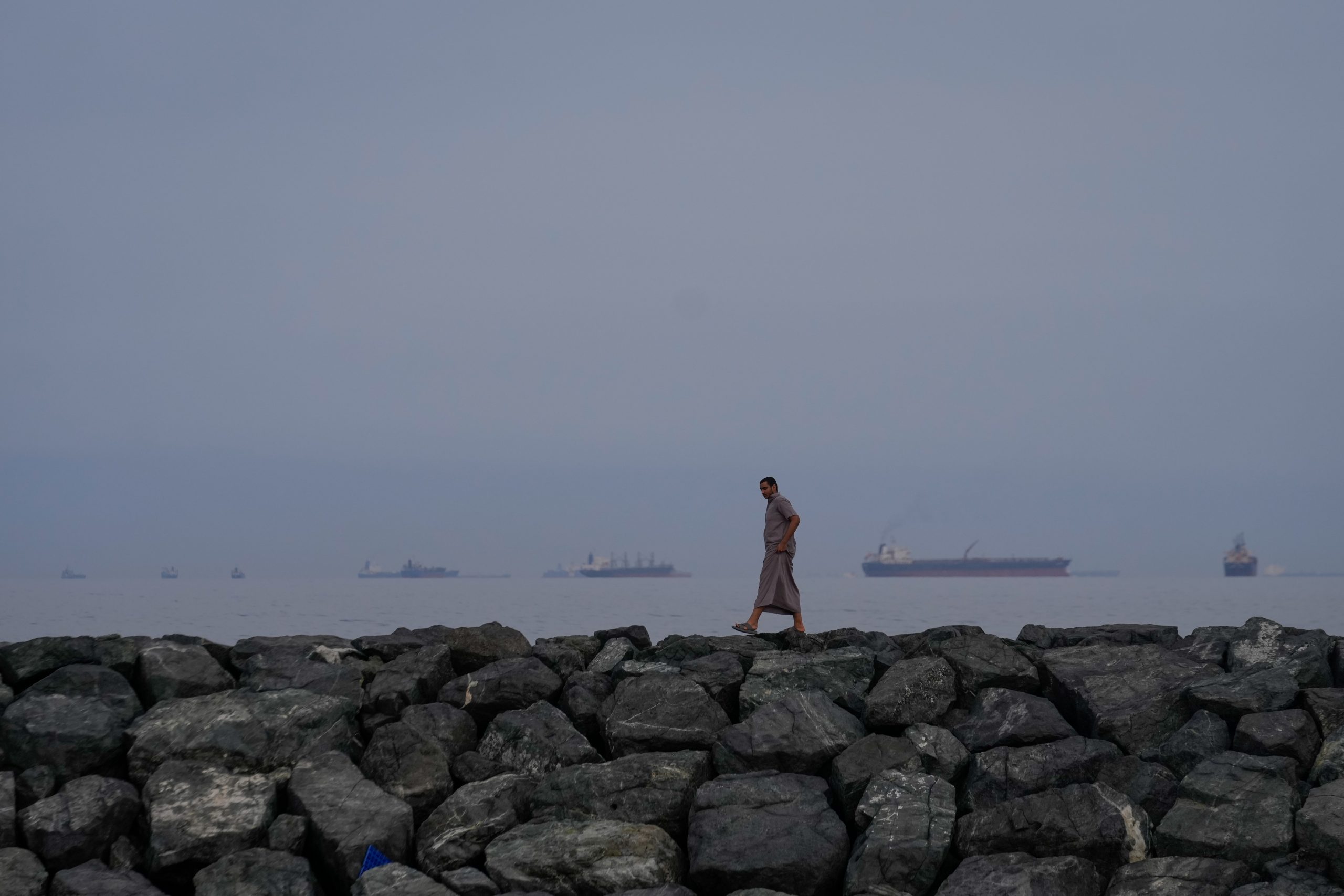
The Royal Navy’s UK Maritime Trade Operation says that it has received 20 reports of incidents affecting vessels operating in and around the Arabian Gulf, Strait of Hormuz and Gulf of Oman over the past two weeks, including three overnight.
Earlier this week, US Energy Secretary Chris Wright posted – and then deleted – a message on social media claiming that the US Navy had successfully escorted an oil tanker through the Strait.
And the French government has partly walked back from President Macron’s promise of a coalition to patrol shipping lanes. “We want to wait until the phase of very high-intensity hostilities ceases,” foreign minister Jean-Noël Barrot said.
Easing pressure
On Thursday morning, the news agency Reuters said that an Indian source had indicated that Iran was preparing to allow India-flagged tankers to transit the Strait of Hormuz. If confirmed, that could go some way towards easing pressure on Asia’s supply.
Meanwhile, economists warn about the contagion of higher oil prices on the wider economy, including the risk of higher food prices and inflation.
“The most important thing for a return to stable flows of oil and gas is the resumption of transit through the Strait of Hormuz,” the IEA said. Options for oil flows to bypass the Strait of Hormuz are limited.”
Watch more:
Will the record release of oil prevent an economic crisis globally?
Oil prices higher than pre-Iran-war levels despite Trump attempts to dampen market fears
‘We can close the Strait of Hormuz for six months’ – Iranian professor