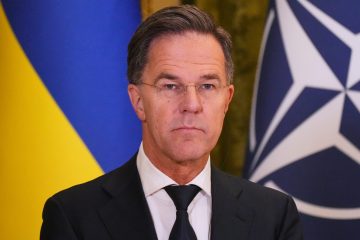
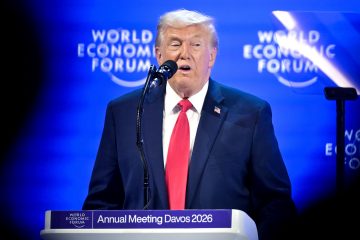
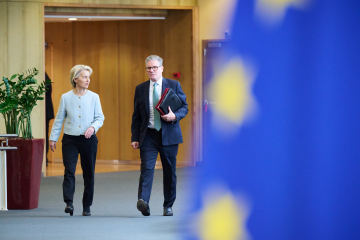
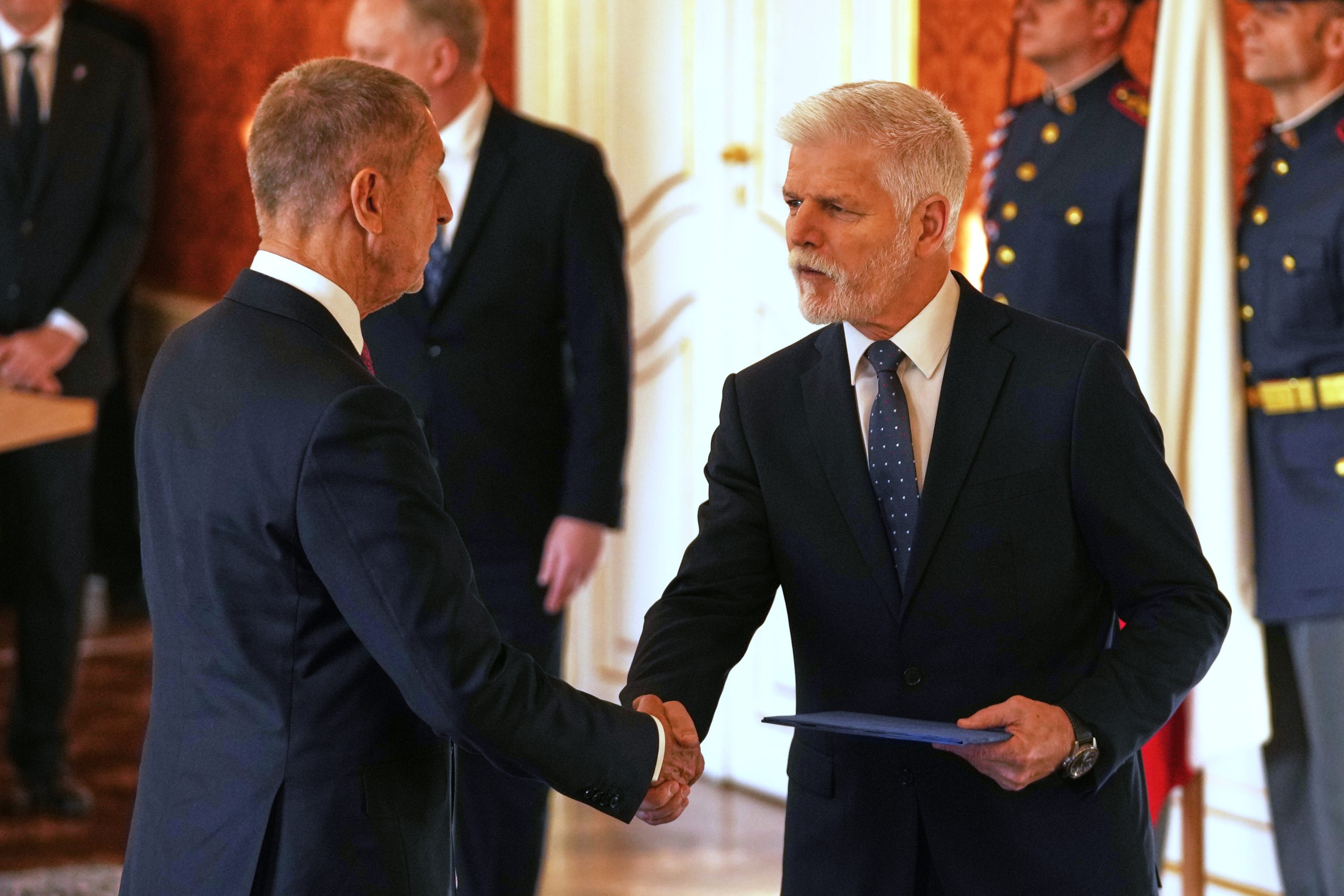
Populist politician and billionaire Andrej Babiš has been sworn in as prime minister of the Czech Republic, the latest thorn in the side of the European Union.
Babiš stood for election on a Trump-inspired ‘Czechia first’ platform that has worried Ukraine and the European Union.
He will lead a coalition government with the far-right Freedom and Direct Democracy and pro-car Motorists for Themselves parties following October’s election.
But Brussels will be watching how the 71 year old performs in office.
Although he has the kind of populist appeal of Orban in Hungary, the two are not always aligned. Likewise with Trump.
‘Unprecedented attack on democracy’
Babiš was an early fan of Trump’s MAGA messaging and it is something he has emulated, but the Czech did not hold back in criticising the storming of the Capitol building back in January 2021, calling it an “unprecedented attack on democracy in the United States”.
Babiš’ pledge to cut, rather than increase, defence spending also has the potential to anger the US president.
Last time Babiš was prime minister, between 2017 and 2021, he was frequently at odds with the EU. He was also heavily criticised by the European Commission for a conflict of interest with his business dealing.
Fraud claims
His food and chemical conglomerate Agrofert benefited from substantial EU subsidies. He is accused of defrauding the EU out of €2 million, reportedly to fund the construction of a conference centre close to Prague.
Babiš says that he has returned the money and denies any wrongdoing, claiming he is a victim of a smear campaign.
To get around tougher transparency rules introduced in his wake, Babiš has now bought up all the shares in his agri-food empire and has promised to put the company in the hands of an independent administrator whilst he serves as prime minister.
The European Commission is expected to scrutinise whether the new structure is in line with EU law.
‘Not a single crown’
However, the biggest conflict with Brussels this time looks to be over Ukraine. In October, Babiš declared that his government would provide “not a single crown” for Ukraine’s military.
That is in stark contrast with the outgoing government, which has been coordinating a Europe-wide arms programme, nick-named the Czech Initiative, resulting in millions of rounds of ammunition being sent to Ukraine.
Babiš has promised to revoke the initiative when he gets behind his desk.
At his swearing-in ceremony this morning, the president hinted that Babiš may have to be more conciliatory in office than he would perhaps like.
“The Czech Republic is in a security and economic context that is not easy”, said Petr Pavel.
Hornet’s nest
“We will have to solve a number of problems that will not be pleasant to the public, they will require not only vision but also courage, they will require not questioning our ties both in the European Union and in Nato”, the president added, in a warning not to kick the hornet’s nest.
The first test will come as soon as next week when EU leaders are due to meet in Brussels to hammer out future funding for Ukraine.
The war-torn country only has enough money to last into the early part of next year. The IMF estimates Ukraine will need around €137 billion to cover its public services and military expenses in 2026 and 2027.
To address that, the European Commission has proposed siphoning off €90 billion of funds from frozen Russian assets in EU-based financial institutions.
Ukraine would only have to repay the money if and when the war ends and Russia agrees to pay compensation.
Taking foreign assets is hugely controversial and Belgium, where most of the assets are held, has so far refused to agree to the plan.
Belgian Prime Minister, Bart de Wever, fears that Russia could successfully sue the EU.
Babiš is expected to take his side. Earlier this week he retweeted a Czech economist who claimed that the European Commission is “gambling with the financial stability of the entire European Union”.
For its part, the European Commission insists its plan is legal and watertight. And, just in case, the risk would be shared amongst all 27 EU member states.
That would reportedly put the Czech Republic on the hook for €3.7 billion.
How Babiš plays it will be an indicator of how he wants to position himself as prime minister on the world stage.
Watch more here:
‘Europe is paying the bill’ because the US no longer wants to, says Czech foreign minister
‘Europe needs to keep supporting Ukraine against Russia’, says deputy Czech foreign minister